

Narrative Design
Subflow Nodes
Reuse a flow inside another flow and branch from its exit outcomes.
Subflow nodes let one flow call another. They are the main tool for composing larger narrative systems from smaller reusable pieces.
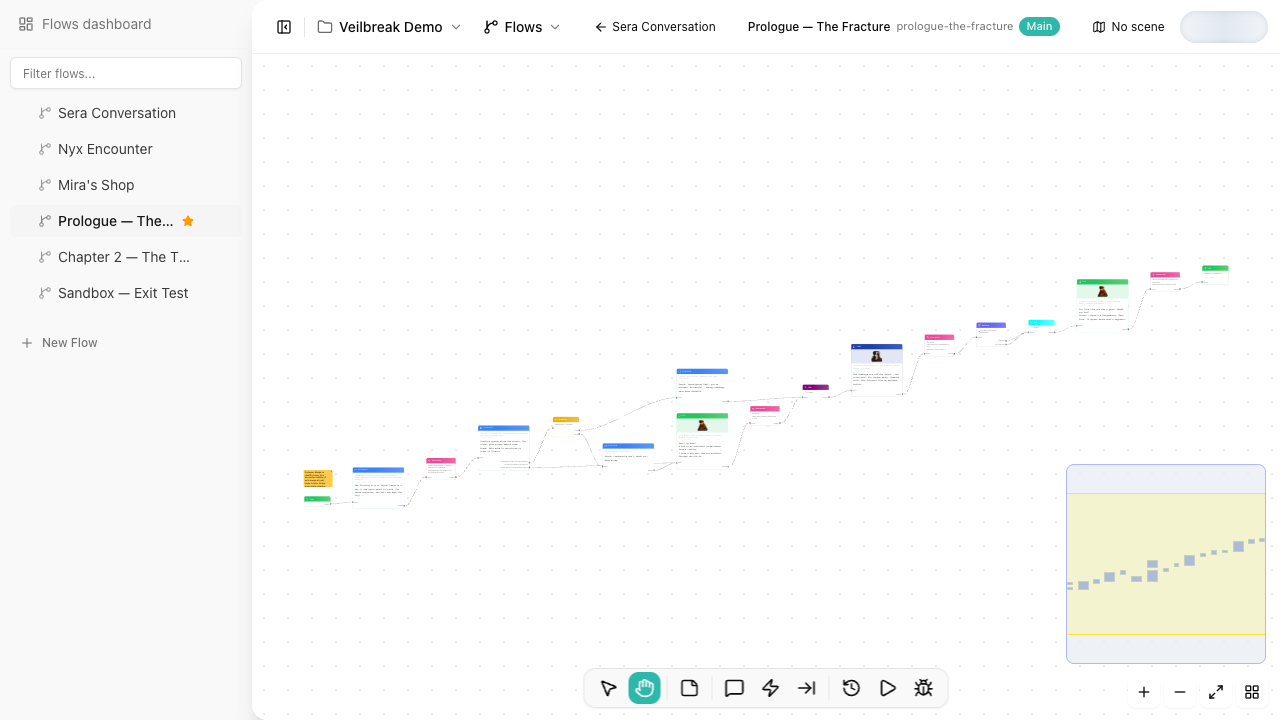
How subflows execute
When execution reaches a Subflow node:
- Storyarn enters the referenced flow at its Entry node.
- The referenced flow runs normally.
- If it reaches an Exit node set to return to caller, execution returns to the parent flow.
- The parent flow continues from the output pin that matches the exit outcome.
Playback and Debug Mode both enter the referenced flow and return to the caller. Debug Mode shows the call stack as a breadcrumb, so you can see where the current run came from and where it will return.
Output pins
Subflow output pins are generated from the referenced flow’s return exits. This makes reusable flows explicit: the parent flow sees the outcomes it can react to.
For example, a merchant_bargain flow might expose:
agreed
refused
not_enough_gold
relationship_too_low
Circular references
Storyarn prevents circular flow references. A flow cannot call itself directly or indirectly through a chain of subflows.
When to create a subflow
Use subflows for reusable conversations, shared checks, repeated quest beats, tutorials, or any narrative chunk that needs its own internal structure but should remain callable from more than one place.